You've felt it before.
You mix your pre-workout, down it 20 minutes before you train, and then it hits — not the clean wave of focus and energy you were hoping for, but a shaky, jittery, heart-racing feeling that makes you want to sit down instead of lift heavy.
Your hands are trembling. Your chest feels tight. You're sweating before you've touched a barbell. And the worst part? You paid good money for this.
If you've ever experienced pre-workout jitters, you're not alone — and you're not imagining it. This is one of the most common complaints in the supplement industry, and it happens for very specific, fixable reasons.
At Syndiket Labs, we spent a long time figuring out exactly why this happens — and then engineering a formula that eliminates it entirely. Here's what we found.
---
## What Actually Causes Pre-Workout Jitters?
Pre-workout jitters are not a mystery. They're the predictable result of specific formulation decisions — usually ones made to cut costs, chase trends, or create a dramatic first impression at the expense of actual performance.
### 1. Too Much Caffeine, Dosed Too Fast
Caffeine is the backbone of almost every pre-workout on the market. It works — nobody's arguing that. But the dose and delivery method matter enormously.
Most commercial pre-workouts are loaded with 300 to 400 milligrams of caffeine per serving — sometimes more. That's the equivalent of three to four strong cups of coffee, hitting your system all at once.
When caffeine floods your bloodstream rapidly, it triggers a spike in adrenaline. Your heart rate shoots up, your blood pressure rises, and your nervous system shifts into overdrive. For some people, that feels amazing for about 20 minutes. For most people, it feels like anxiety — because it essentially is anxiety, chemically speaking.
The problem isn't caffeine itself. The problem is reckless dosing.
### 2. Cheap Stimulant Blends
Beyond caffeine, many pre-workouts pile on additional stimulants — synephrine, hordenine, tyramine, yohimbine — often in combinations that have never been clinically tested together.
Yohimbine is a particularly common culprit. It's a powerful stimulant that increases adrenaline levels and blocks receptors that normally regulate it. For sensitive individuals, even modest doses can cause intense anxiety, elevated heart rate, and shaking hands. It's also dose-dependent in ways most labels don't communicate clearly.
Stack two or three of these stimulants on top of 350mg of caffeine and you have a formula that feels like a panic attack in a shaker cup.
### 3. Proprietary Blends Hiding the Real Numbers
Here's something the supplement industry doesn't advertise: many popular pre-workouts use "proprietary blends" — a legal way to list ingredients without disclosing the exact amounts of each one.
So when a label says "Energy Matrix — 750mg" and lists six ingredients beneath it, you have no idea how much of each ingredient is actually in there. That stimulant you're sensitive to? Could be the dominant ingredient. You'd never know.
This is formulation that prioritizes legal cover over consumer safety.
### 4. Poor Quality Caffeine Sources
Not all caffeine is the same. Anhydrous caffeine — the standard in most pre-workouts — absorbs rapidly and peaks quickly. That's what creates the spike-and-crash cycle.
Better alternatives exist. Caffeine malate, for example, absorbs more gradually. Natural caffeine sourced from green tea or green coffee tends to behave differently in the body than synthetic anhydrous caffeine. The type of caffeine used matters just as much as the dose.
### 5. Stimulant Tolerance Isn't Accounted For
Most pre-workout formulas are designed to hit hard on the first use. But they're not designed for daily use — meaning they often over-stimulate beginners and under-deliver for experienced athletes who've built tolerance.
A formula built for your first week at the gym is not a formula built for your second year of consistent training. These are different people with different needs, and most brands don't care about that distinction.
---
## The Side Effects Nobody Talks About
Jitters are the most obvious symptom, but they're not the only one. Poorly formulated pre-workouts can cause a cascade of unpleasant effects:
**Anxiety and overstimulation** — that nervous, on-edge feeling that makes it hard to focus on anything, including your actual workout.
**Elevated heart rate** — uncomfortable at best, dangerous at worst, especially for anyone with underlying cardiovascular sensitivity.
**Stomach discomfort** — many stimulants irritate the gut lining, particularly when taken on an empty stomach. The result is nausea, cramping, or worse.
**Appetite suppression** — high-stimulant formulas often kill your hunger for hours afterward, which wrecks your post-workout nutrition and recovery.
**The afternoon crash** — the inevitable consequence of an artificial adrenaline spike. When the stimulants wear off, you drop — mentally and physically.
**Sleep disruption** — even an afternoon dose of a high-stimulant pre-workout can affect sleep quality hours later, which defeats the entire purpose of training hard.
---
## Why the Industry Keeps Making the Same Formula
If jitters are so well understood, why do so many brands keep producing formulas that cause them?
The honest answer: because a strong first impression sells.
When someone tries a new pre-workout and feels an immediate, powerful hit, they often interpret that as the product "working." The shaking, the racing heart, the intense tingling — those become associated with effectiveness, even when they're actually signs of overstimulation.
Brands know this. They design for the first-use experience, not for sustainable daily performance. And because most consumers cycle through pre-workouts frequently, there's no incentive to build something you can take every day for years.
That model works for their business. It doesn't work for you.
---
## How We Fixed It With Pure Magic
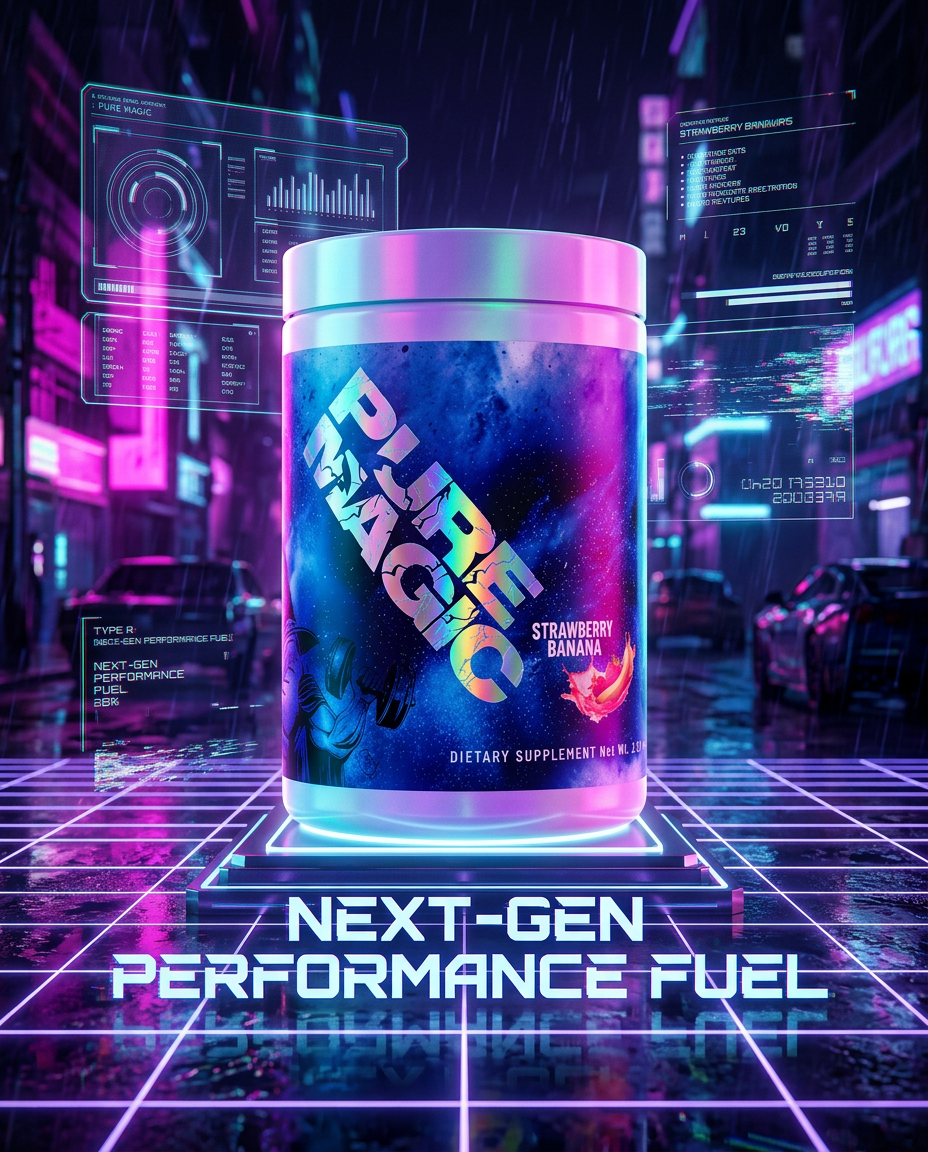
When we started building Pure Magic Pre-Workout at Syndiket Labs, the brief was simple: no jitters, no crash, no excuses.
We tested every stimulant ingredient individually. We ran documented human trials across different dosages and combinations. We logged everything. And we kept adjusting until we found the combination that delivers sustained, focused energy — without a single one of the side effects listed above.
Here's what that looked like in practice:
**Controlled caffeine dosing** — not the maximum we could legally put in a serving, but the amount that actually produces optimal performance for real athletes training daily.
**No stacked stimulants** — Pure Magic doesn't rely on a cocktail of cheap stimulants to create an artificial intensity spike. The energy comes from a clean, well-dosed formula that works with your body instead of forcing an adrenaline response.
**Full label transparency** — no proprietary blends. Every ingredient, every dose, disclosed on the label. Because we stand behind what's in the formula.
**Formulated for daily use** — Pure Magic was designed to be your daily driver. That means it has to be something you can take every morning, feel great from, and not need to cycle off of. That standard changes everything about how you formulate.
The result is a pre-workout that feels different from the first sip — not because it hits harder, but because it works smarter.
---
## How to Avoid Jitters From Any Pre-Workout
If you're not ready to switch yet, here are some ways to reduce jitter risk with whatever pre-workout you're currently using:
**Start with half a serving.** Most labels recommend one full scoop, but that's often calibrated for the average person, not for your specific sensitivity. Start with half and assess.
**Never take it on an empty stomach.** Food slows absorption and blunts the spike. Even a small snack 30 minutes before your pre-workout can make a noticeable difference.
**Check the caffeine content.** If the label lists more than 250mg per serving and you're sensitive to stimulants, that's your first red flag.
**Avoid stacked stimulants.** If the label includes yohimbine, synephrine, or hordenine alongside high-dose caffeine, there's a good chance you're going to feel it.
**Look for transparent labels.** If you can't see the exact dose of every ingredient, you can't make an informed decision about what you're putting in your body.
**Stay hydrated.** Dehydration amplifies the effects of stimulants. If you're taking a pre-workout and not drinking enough water, everything gets worse.
---
## The Bottom Line
Pre-workout jitters are not inevitable. They're not a sign that the product is working. They're a sign that the formula is poorly designed — or designed for the wrong goal.
A great pre-workout should make you feel focused, energized, and ready to train. Not anxious. Not shaky. Not like you need to sit down until the stimulants wear off.
That's the standard we built Pure Magic around. And it's the standard every pre-workout should be held to.
If you're tired of tolerating jitters because you thought that was just part of the deal — it's not. Try Pure Magic and find out what clean energy actually feels like.
---
*Pure Magic Pre-Workout is available at syndiketlabs.com. Built by a former Recon Marine. Tested by real people. No jitters, no crash, no compromises.